
Stop talking about the business case for EDI in sport
Make inclusion relevant by connecting it to the real challenges sport leaders face every day.
Hello and welcome back to HTVB Sport 👋🏽
It feels good to be here again starting fresh, sharing more guidance, ideas and inspiration for leaders who care about all things EDI in sport.
If you find something useful, tell a friend or colleague who’d value it too. And if there’s a topic you’d like HTVB Sport to cover, we’d love to hear from you!
-Hayley, HTVB Director

Stop talking about the business case for EDI in sport…
Start talking about the business problems it solves
Despite ongoing pressures, inclusion doesn’t need more justification. It actually needs relevance.
Most leaders are not waiting for us to share more evidence that EDI matters… What they are looking for are solutions to the multitude of problems keeping them up at night. That is why I do not lead with the business case. I start with what is not working and how inclusion can help fix it.
This begins with one simple question: What are the problems we need to solve?
In every other area of business, this is how priorities are set - so why is this not the case with EDI? When we frame EDI work as a way to solve real organisational problems, it becomes immediately relevant and much harder to ignore.

This approach also helps move inclusion out of the abstract and into the everyday. It is no longer something “nice to have” or a tick-box exercise, but a practical and essential way of doing business. In sport, where the pressure to perform is constant, this framing helps leaders see that inclusion is not a distraction from performance.
Here are some examples:
Problem 1: “Our teams are not performing at their best.”
Liam Rosenior, Head Coach of Ligue 1 club Strasbourg, recently spoke about this to The Athletic. “If you have multicultural staff, you improve your players so much quicker,” he explained. “You have reference points, people who understand and connect with them. Otherwise, you have blind spots. Diversity is not about numbers; it is about value.”
Rosenior’s reflection captures the essence of what inclusion really means in practice. It is not about ticking boxes but about broadening understanding, improving connection and unlocking performance through diverse perspectives.
Using inclusion as a diagnostic lens allows leaders to explore what is not working and what their people need - whether athletes or staff. This isn’t just about assessing representation gaps in relation to your team’s and audience’s needs, but also inclusive feedback mechanisms such as listening groups, 360 degree reviews and reciprocal mentoring that can help create the psychological safety and clarity that high performing teams rely on. When people feel heard, understood and able to contribute fully, performance improves.
Problem 2: “We have just lost one of our top talents to a rival.”
If retaining top culture is an issue, culture and lack of belonging can often be the culprit.The saying “people do not leave jobs, they leave managers” still holds true, especially in sport where progression and belonging can feel uncertain for those who face additional barriers.
Recent research from Women in Football revealed that women working in the game continue to lack access to training and development opportunities.

When development is inconsistent, the result is predictable…. People disengage, feel overlooked and eventually leave.
Driving inclusion through progression and talent development strategies ensures that pathways are transparent and fair. It helps surface experience gaps, strengthens leadership capability and supports people to grow. The result is that the actual best person ends up in the right role, not the most visible or well connected person.
Problem 3: “We want to grow in international markets but are struggling to compete with others.”
Growth in global markets requires cultural understanding. If leadership teams, marketing campaigns or operations lack that understanding, expansion will struggle.
Inclusion enhances cultural intelligence. It helps organisations tell stories that resonate across audiences and build relationships in diverse markets. For sport, which already speaks a universal language, this is a huge opportunity. The more representative and self-aware the organisation, the more authentic its global reach will be.
Leading across difference, navigating complexity and handling sensitive issues are no longer niche skills. They are essential capabilities for every sport leader operating in a global, interconnected industry.
Problem 4: “We need to attract new sponsors, investors and strategic partners.”
Commercial stakeholders now care deeply about credibility and purpose. Many investors assess environmental, social and governance factors as part of their decision-making. A weak track record on ESG, or recent scandals can limit partnership opportunities or even prevent access to certain funds.
Inclusion strengthens organisational trustworthiness. It signals that values are not just words on paper but principles that guide decisions. When sport organisations demonstrate this through action, they become more attractive to sponsors and investors who are seeking long-term, values aligned partnerships.
How to make this approach part of your strategy
1. Understand the broader business context
Inclusion work is most impactful when it aligns with commercial reality. If you are an EDI lead, take time to understand your organisation’s current performance pressures, strategic goals and external risks. The clearer your understanding of where the business is under strain, the more relevant your EDI interventions can be. It is about joining the dots between inclusion and the outcomes leaders already care about.
2. Treat inclusion as a strategic intervention, not a standalone initiative
Before launching new activity, pause and ask what you are trying to improve, fix or unlock. Then design inclusion work that directly contributes to that outcome. Ground it in evidence and focus on measurable impact. This shifts inclusion from being seen as an add-on to being recognised as a key enabler of organisational success.
3.Dig beneath the surface using data
Avoid treating symptoms. If the problem appears to be low engagement or poor retention, ask why. Use qualitative data, exit interviews, lived experience and culture audits to uncover what is really going on. Often, the issue that looks like a people problem is actually structural. It might relate to systems, behaviours or power dynamics that have gone unchallenged.
If any of this resonates and you’re wondering how to make inclusion more relevant inside your organisation, we can help.
📰 In case you missed it:
Stories, research and ideas shaping HTVB Sport this month
Brock University researcher explores Black health and wellness through sport
Dr Janelle Joseph’s research shines a light on how race, culture and systemic barriers shape access to health and participation in sport. Her work highlights the urgent need for intersectional approaches to wellbeing in sport and physical activity.
🔗 Read more
Inside the hip L.A. golf gathering for those who were never invited but always belonged
The Swang Golf Collective in Los Angeles is redefining what golf looks and feels like, creating space for those who have historically been excluded. A great example of cultural reinvention and belonging in action.
🔗 Read more
The relationship between gambling and abuse
The WTA and ITF have published the first ever season-wide report outlining the scale of abuse directed at players on social media – and are calling on the gambling industry to more effectively tackle those responsible.

🔥 Raising the bar:
Shout out to HTVB’s clients making moves 👏🏽
Active Oxfordshire
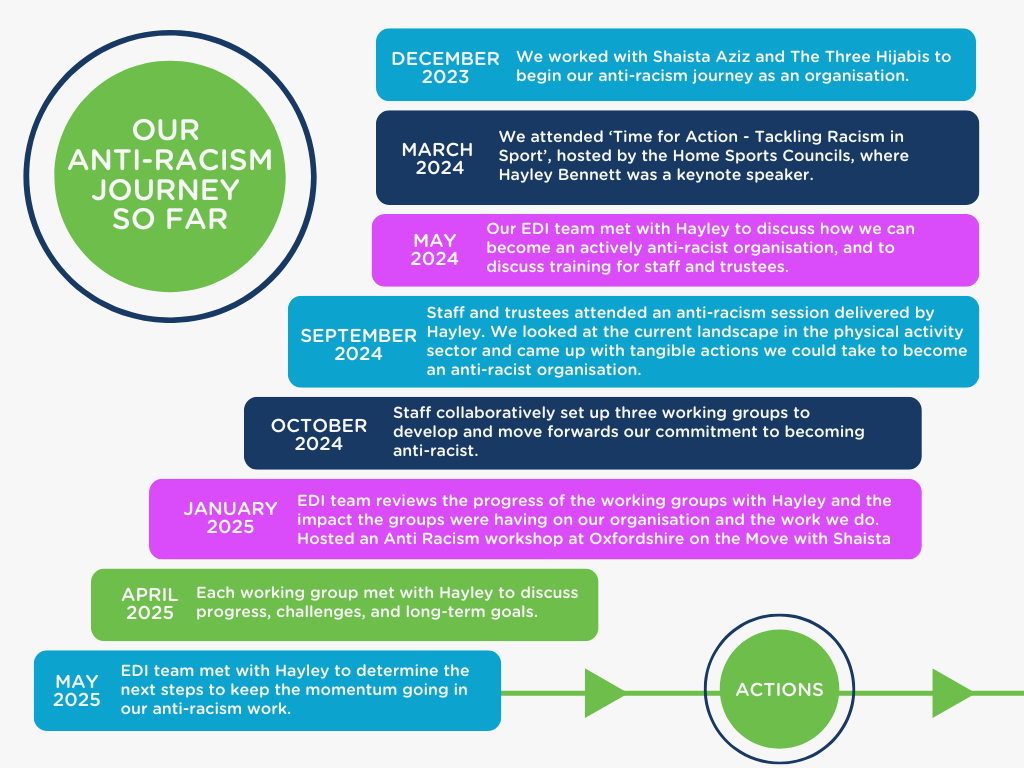
Active Oxfordshire has shared a transparent update on its anti-racism journey, which HTVB has been proud to support. The piece outlines lessons, challenges and commitments made so far, offering a powerful example of accountability and continuous learning in action.
👉 Read about their journey
LTA
LTA partners with Women In Sport to launch new research on the experiences of black girls in sport. Alexis Simms, LTA EDI Development Partner said, “As we continue our mission to open up tennis to everyone, it’s crucial not to overlook Black girls, who are often left behind as they face unique and additional barriers to other girls.
Brentford FC
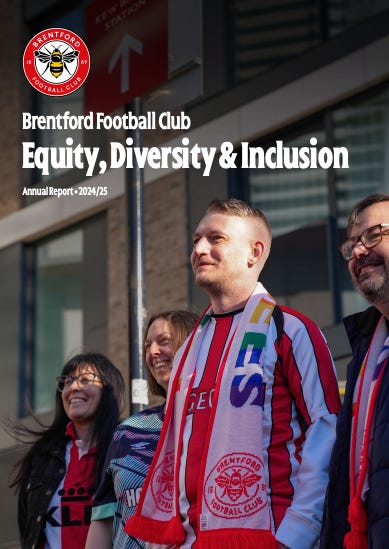
Brentford has published its 2025 Equity, Diversity and Inclusion Report, structured around four key pillars: data and compliance, learning and development, policies and processes, and culture. It is a thoughtful and transparent roadmap that others across the industry can learn from.
👉 Explore the report

💛 Something to make you smile
Because sport should also bring us joy, connection and a reminder of why this work matters


Thank you for reading and for being part of this growing community of people who believe sport can lead the way in inclusion and wellbeing. See you next month.